Partnership · June 1, 2025
Partnering with Epic Games Korea
 Joon Jung
Partnering with Epic Games Korea
Epic Games Korea has partnered with MVNT, the Seoul-based AI infrastructure company building dance generation models for 3D animation, to bring AI-generated choreography into the Unreal Engine ecosystem. The collaboration will run as a co-R&D engagement focused on MVNT's flagship tool, MVNT Studio.
The partnership reflects a thesis MVNT has been building against since its founding in 2023: that 3D dance animation is the last major creative workflow AI has yet to rewrite, and that the team that gets it right will shape how virtual characters move for the next decade.
A pattern that keeps recurring
Every time a new technology has rewritten a creative medium, the medium itself has transformed. The camera gave painting Impressionism. The synthesizer gave music EDM. The DAW turned bedroom producers into chart-toppers.
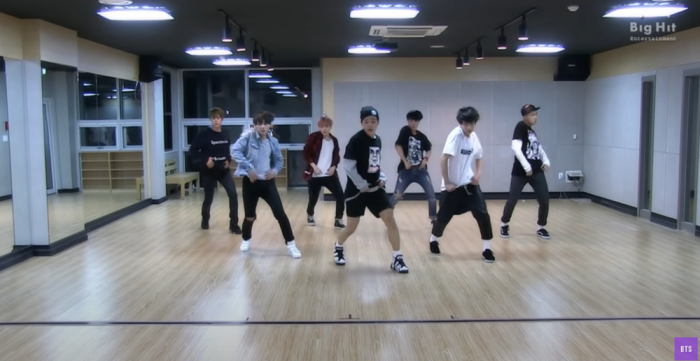
Dance hasn't had its moment yet. Choreography is still produced the way it was in 1990 — a choreographer in a studio, mirrors on the wall, hours of physical labor, followed by weeks of motion capture cleanup before anything reaches a game engine. For studios shipping at AAA scale, it remains the single most labor-intensive animation workflow they own. Environment, lighting, and facial animation all have mature AI tooling. Dance does not.
That gap is what MVNT was built to close.
Building the toolkit
MVNT develops an end-to-end 3D dance animation toolkit powered by a native dance generation AI model. MVNT Studio, its flagship product, is designed to drop into the workflows of 3D animators and game developers — taking music or a text prompt as input and producing clean, retargetable choreography as output, with no motion capture session or manual keyframing required.
The model is trained on a dataset built in collaboration with approximately 100 professional choreographers, paired with thousands of hours of pose estimation data extracted from dance videos and millions of text annotations, each kinematically and semantically analyzed by industry experts. The catalogue spans the full spectrum of global dance — from classical ballet to modern-day K-pop hits.
CTO Seiok Kim, a veteran AI engineer and lifelong b-boy, argues that model quality is downstream of dataset quality, and that the persistent uncanny valley in generative animation today is a data problem more than an architecture one. Kim — the engineer behind the world's first AI B-boy project, developed in 2017 with SM Entertainment and KOCCA — is also looking past gaming toward humanoid robotics, where high-fidelity dance generation may turn out to be one of the more demanding benchmarks for motion control. MVNT's AI team is preparing an initial model focused on K-pop-quality dance sequences, with closed beta testing alongside certified choreographers planned by the end of November.
Why Epic Games Korea
Unreal is where high-fidelity virtual characters get built. Fortnite emotes, MetaHuman performances, the next generation of virtual concerts — the workflows that matter for dance run on UE5. For Epic Games Korea, MVNT represents one of the few teams approaching dance as an infrastructure problem rather than a content one. The co-R&D engagement opens up animation workflow optimization for Unreal teams, licensed dance catalogues for Fortnite-scale titles, and a path toward auto-labeled dance animations across the FAB marketplace.
Co-founder and CEO Joon Jung points to the roughly $10B emote and cosmetics market as the more immediate commercial backdrop — short snippets of choreography, bought as virtual goods, worn by avatars across Fortnite, PUBG, and beyond. As virtual platforms grow more social, hyperreal, and interconnected, he argues, freedom of expression in those worlds will increasingly run through dance. MVNT was founded in 2023 in part to serve precisely that thesis, originally launching as an emote publisher for game studios.
A quieter mission
Running underneath the technology is a longer-standing problem: dance has historically been one of the least protected forms of creative IP. Choreographers routinely watch their work copied into games with no credit and no compensation, with the Kyle Hanagami v. Epic Games lawsuit only the most visible recent example.
MVNT's co-founder and Chief Producer Youngjun Choi is one of the most prolific K-pop choreographers of the past decade — more than 700 credits including mega-hits for SEVENTEEN, TWICE, and BTS — and serves on the board of 1MILLION Dance Studio and as Vice President of the Korea Choreography Copyright Association. He founded MVNT in part to address this gap. The same recognition technology that generates dance, the company argues, can also identify, attribute, and protect it. MVNT is building both sides of that loop, including mv'n, a creator-economy app where every dancer's artwork can be indexed and credited.
Backing and what's next
MVNT raised seed funding from Mashup Ventures in May 2024 and was recently accepted into the NVIDIA Inception program. The team is distributed across Seoul, Seattle, and Amsterdam, and incorporated a US entity in Seattle in 2024 to support recruiting and go-to-market with the global gaming industry. Prior partnerships include Krafton, Naver Z, SM Entertainment, and copyright organizations under the Korean government.
The Epic Games Korea collaboration marks MVNT's most significant infrastructure partnership to date — and, the team hopes, the first of many that will move dance from a labor problem to a programmable one.