Company · April 14, 2026
How Dance-Gen AI Reshapes Entertainment
 Joon Jung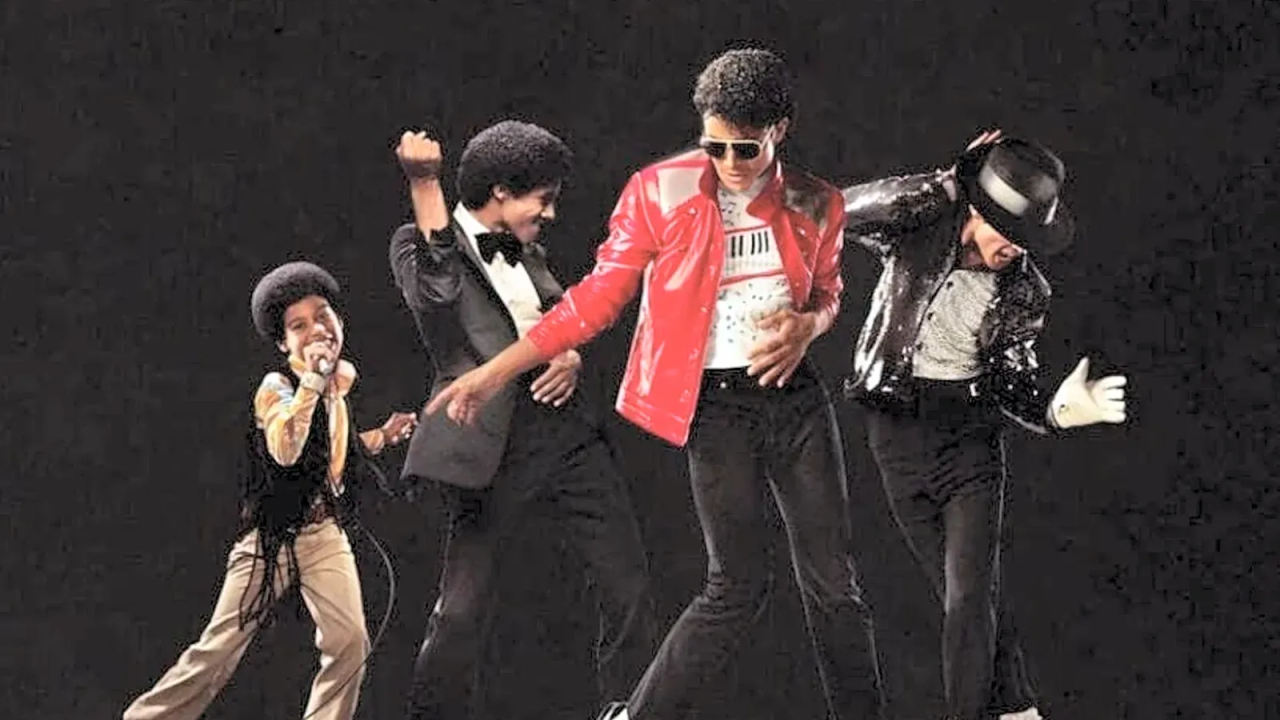
From Michael Jackson to BTS, dance has always been music's strongest companion. Super Bowl stages, Coachella, Olympics openings — the moments that defined pop culture weren't just songs. Artists perform, audiences follow, the energy spreads.
There are ongoing debates about how generative music and video models are disrupting traditional workflows — yet it's clear that creators and companies are already embracing them to accelerate both quality and quantity of output. But among this wave, I keep witnessing the same thing: dance remains the only layer untouched in the modern entertainment stack.
What if there's a production-ready dance generative model that just amplifies this joy of dance — gives more freedom for people to move, and brings more synergy to the music and video content they're already making?
The Economics of Performance Production
The numbers and tech side of dance don't get covered much — but there are serious businesses and real opportunities behind it. Take K-pop, the world's largest producer of human performance at scale.
When a label confirms a comeback, a months-long chain begins for choreographying: briefings, outreach through personal contacts, scheduling, waiting on drafts, consolidating multiple concepts, aligning with the performance director, adjusting formations, then training the actual performers — all before a single music show, music video, concert, or TikTok we casually scroll past.
A first comeback from a major agency routinely runs over $50K in production costs, with choreography alone accounting for nearly a third. Tier-1 choreographers charge around $15K per song. Major acts commission 3–7 simultaneously.
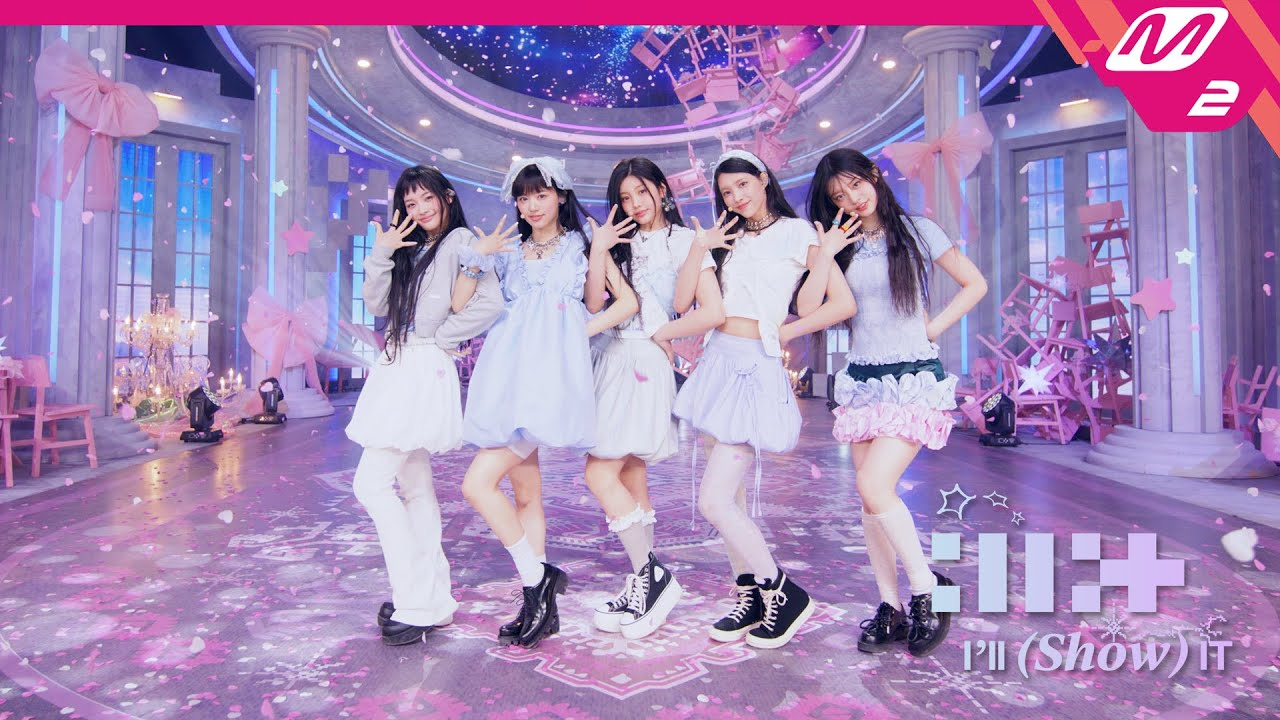
fun fact: ILLIT's debut sensation 'Magnetic' featured SEVEN choreographers
Slow in Work, Yet Fast in Growth
Korea alone has 233 active K-pop groups as of 2025, roughly 155 of which run active comeback cycles. At two comebacks and 2.5 choreographed songs per cycle, that's approximately 775 choreographed songs per year — $11–15M in annual spend, in Korea alone.
But it's no longer a Korean phenomenon. J-pop saw 235+ group debuts in 2025. C-pop runs 60+ idol groups on 2–3 cycles per year. Latin has 50+ acts with dedicated choreography production. Total annual choreographed output across these four markets: roughly 1,540 songs per year. Every single one produced manually, through personal relationships, with no software in the loop.
Rising Demands Across UGC Creators and AI
Not only for the music industry, dance challenges have become music's default promotion formula — 850B+ hashtag views on TikTok, dance content earning a 54% higher share rate than average. Every challenge starts with a choreographed hook. None of them have production infrastructure behind them.
And the format is shifting again. It's moving toward virtual characters through AI — avatars, game assets, generated personas. The demand for choreography is expanding beyond human bodies entirely. Motion-transfer content drove some of the largest usage spikes video-gen platforms have ever seen. Kling and Seedance's dance features went viral not because the outputs were polished, but because the desire to see anything move to music is deeply, universally human.
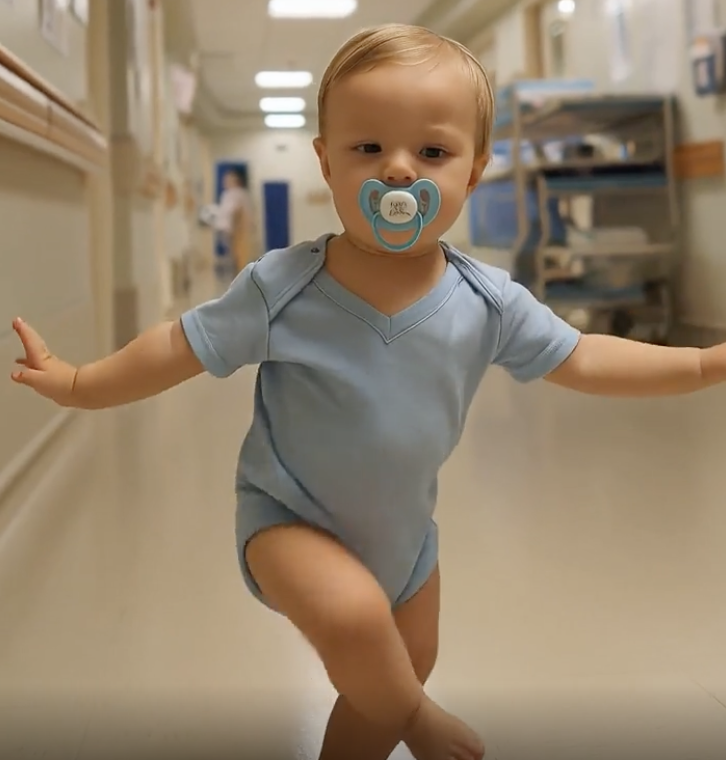
‘the baby dancing meme’, a peak motion transfer template powered by Kling (Kuaishou) broke down the internet and led to phenomenal growth in users and revenues.
Opportunity: The Only Bottleneck Is Performance
That demand has been validated with general-purpose tools. What doesn't yet exist is a purpose-built system trained on professional dance data, conditioned on music, and designed for how creators and choreographers actually work.
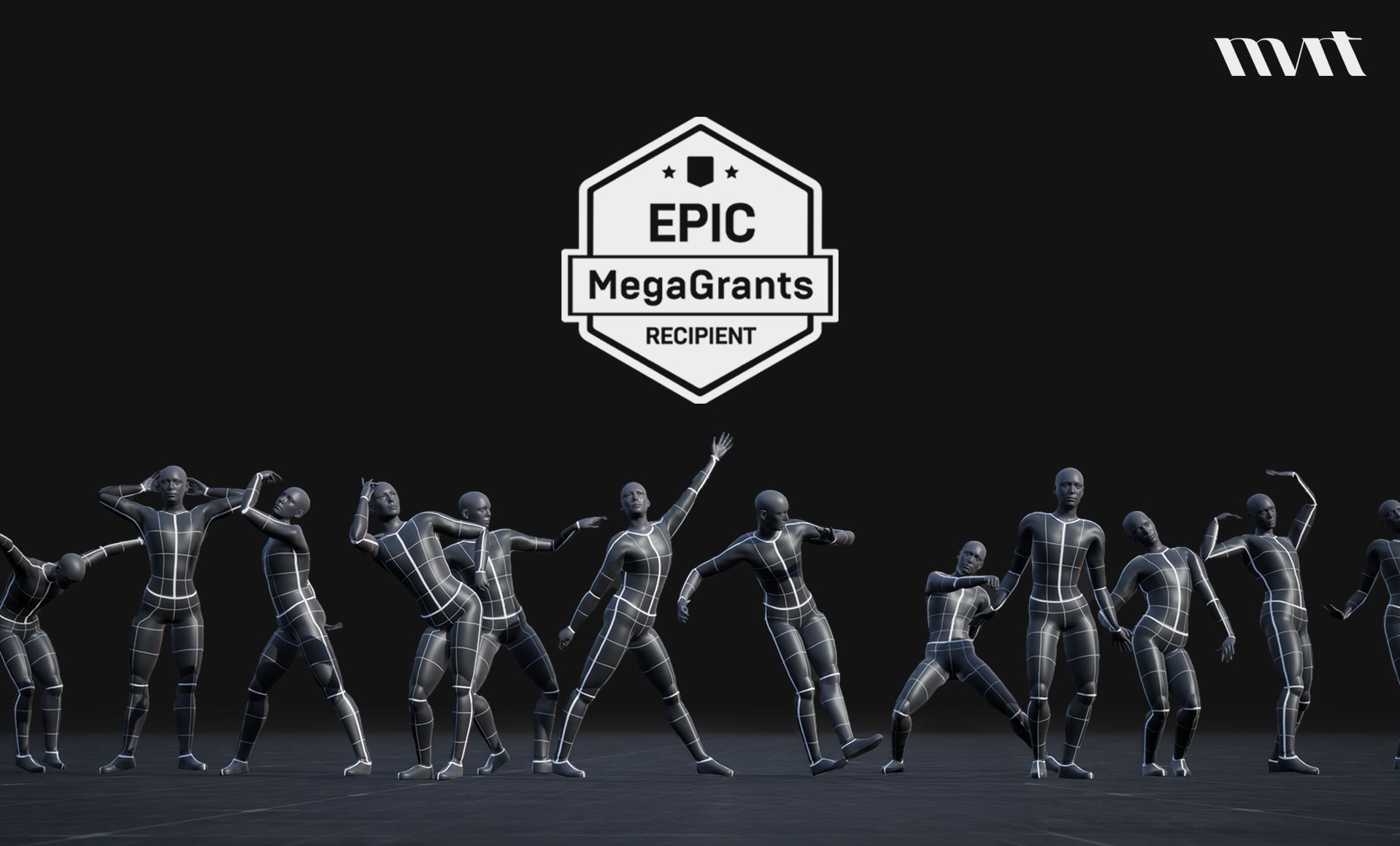
We've been researching and building a dance-specific generation model for years. Here's what mvntSTUDIO does today.
Upload a track and our AI analyzes the music: tempo, structure, energy shifts, phrase breaks. From that, it generates choreography sequences conditioned on what the music is actually doing — not generic motion layered on top. From K-pop to hip-hop, Bollywood to Latin. You can edit those sequences, swap moves, adjust timing, and build something that's yours. Preview it on a 3D avatar, render into a 2D video, and publish to the mvntSTUDIO gallery — where a growing community of creators share and discover work.
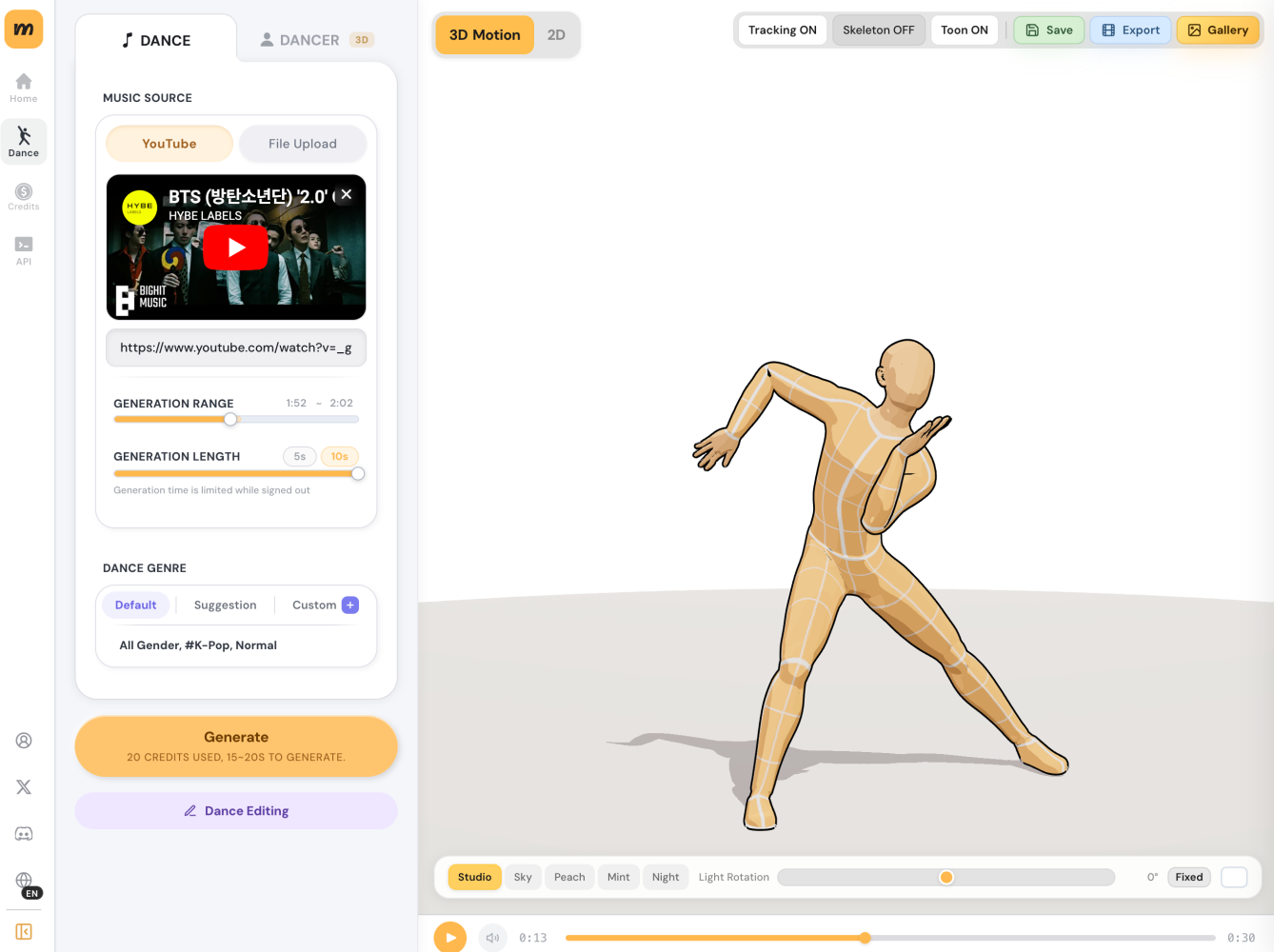
perhaps the world's first dance-gen experience
The Future As We Build
Although we spent years to build our current model, it's still early. It may work well for meme content, quick drafts, and previs. It's not yet a primary tool for professional production — but Suno launched as a novelty. Then the model kept improving, the use cases quietly expanded, and it changed the landscape.
We think the same plays out for dance generation. Multi-person formations, full-song generation, multi-genre support, automated facial sync — these are coming as the R&D compounds. Each threshold we cross opens a new segment of real users, from UGC creators today toward professional production workflows over time.
PlayRe-imagining Billie Jean with our dance model mvnt-m4.1
There's a cliché conversation in AI about replacing creative workers. For dance, it doesn't quite apply — at the end of the day, it's our human body that has to deliver the energy and emotion.
Our goal is to build the creative suite that supports that, and make sure the people who made the model possible are compensated through it. The choreographers who trained our model contributed their movement vocabulary, their years of stylistic development. We're building revenue-sharing infrastructure so they benefit as usage grows — traceable through a tag database and credit system we've spent years constructing.
What makes our model different is what's underneath it. Youngjun Choi, our co-founder, carries over 800 K-pop production credits. Over several years, we worked directly with approximately 100 professional choreographers and top-tier gaming and music companies to build a proprietary mocap dataset — genre-tagged, music-conditioned, built from professional execution.
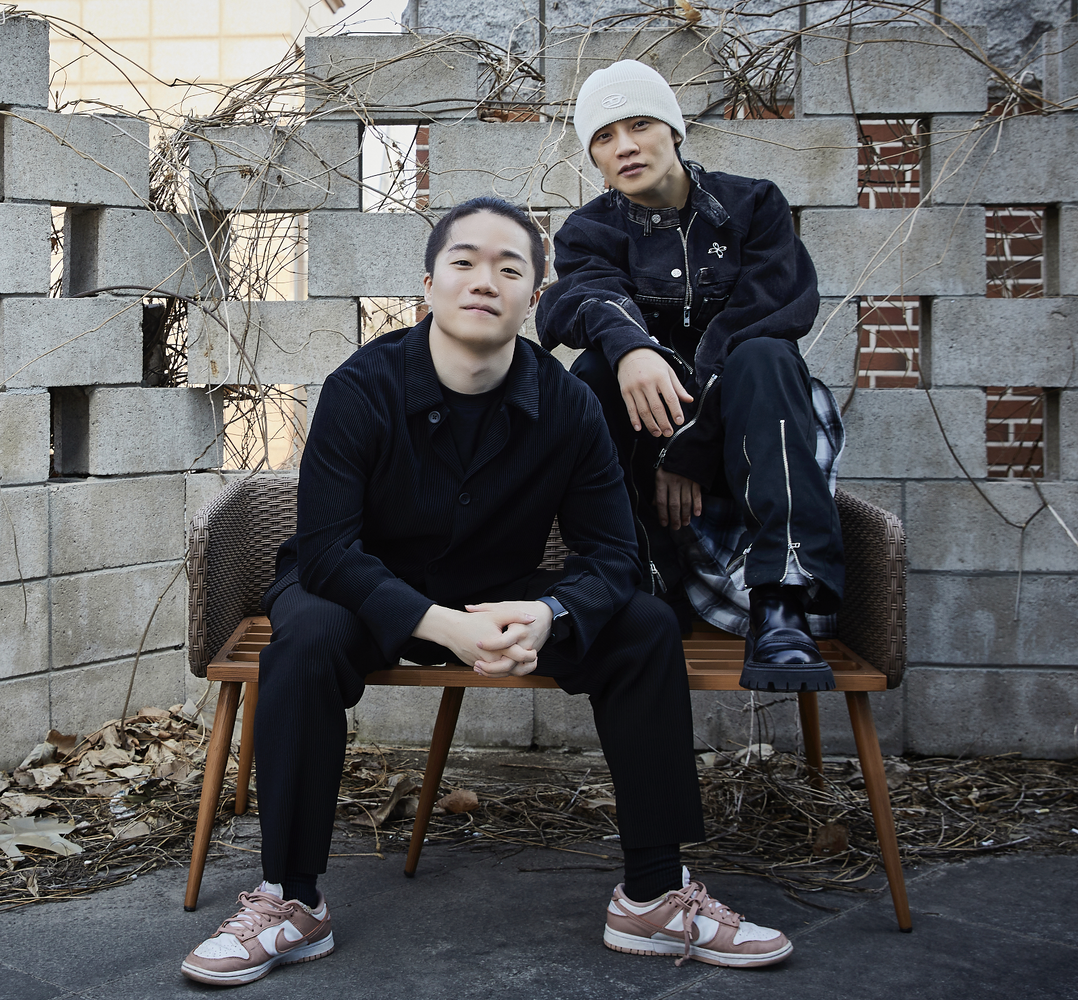
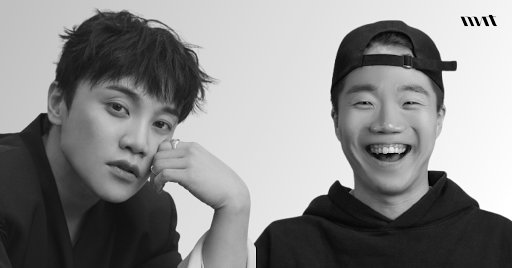
co-founders Joon Jung (CEO) and Youngjun Choi (Executive Producer)
The model gets better as more professionals use it. Professionals benefit as the model gets more capable. That's the loop — not just a generation tool, but infrastructure for a healthier creative economy around dance.
Music production has Logic and Ableton. Film has Premier Pro. And now they even have Suno and Seedance. The system serving choreography today is the same one that served 10 groups in 2005 — a personal network of overworked choreographers, no standardized workflow, no tooling, no data layer.
Dance has always been how humans move together to music. We think there's a version of that which doesn't require a month of production and a five-figure budget every time someone wants to make something. mvntSTUDIO is the first step toward that.